
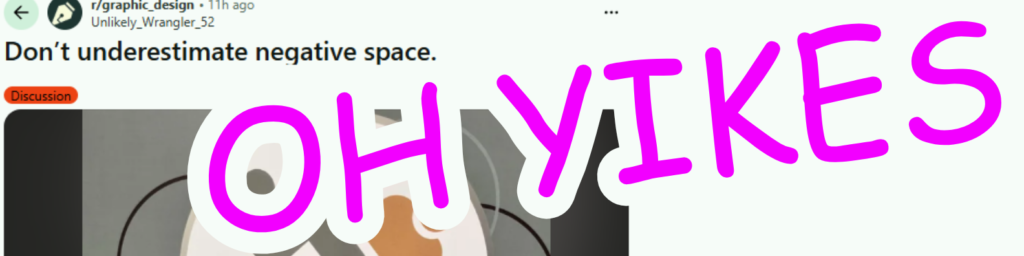
I came across a poster recently that stopped me in my tracks.
“Participation – We belong to a family and a community, we should help each other grow in love and kindness.”
The imagery featured four figures arranged in multiethnic harmony in a symmetrical formation, reaching toward one another on a round table. The intention was clear: community discussion, unity, mutual support, shared growth.
But the execution accidentally created something else entirely.
The composition, with its rotational symmetry and the positioning of the figures, formed a shape that strongly resembled a swastika.
At the same time, the circular, interlocked arrangement of bodies and gestures introduced another unintended reading, one that felt very awkward and inappropriate, especially in combination with the body text.
I don’t think the designer meant any harm. I’m almost certain they didn’t. That’s actually what made it hard to look at, because it’s such a clean example of how little intent matters once something is in front of someone else’s eyes.
The viewer doesn’t see what you meant, they see shapes, and then their brain starts pattern-matching before they’ve even read a word.
And if that pattern lands somewhere loaded, it’s done. You can’t squeeze that spilled sour milk back into the cow.
Warning: offensive imagery ahead.
You have been warned.
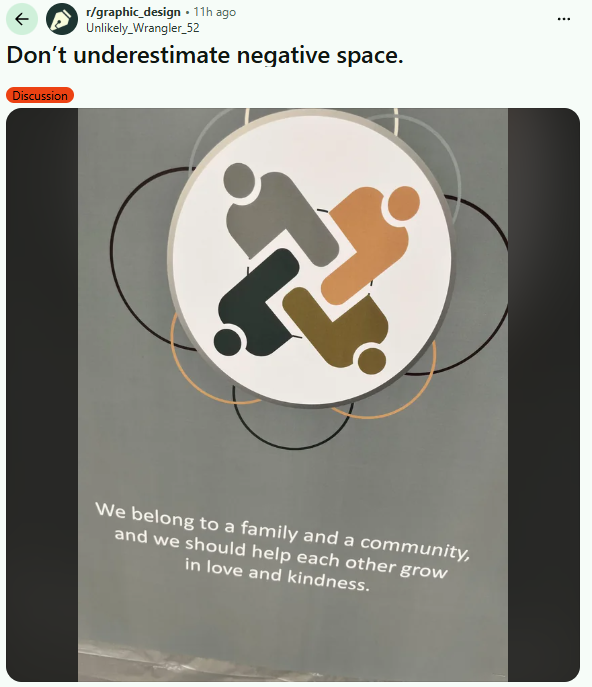
This one came from a pretty common combination: multiple figures, radial symmetry, mirrored and interlocked poses. The exact things we use to create balance and harmony. Also, apparently, the exact things that can go sideways.
Intent is what you start with. Composition is what people actually see. The gap between those two is where a lot of quietly unfortunate design lives.
Worth squinting at your own work sometimes. Literally step back, blur your eyes, and ask what shape you’re actually making.
But don’t feel bad for making a mistake like this.
You’re not a real designer if you have never accidentally made something that makes people snicker.
The important thing is to catch these types of errors before the work is pushed out into the wider world, which is why there’s this thing called the review prcess.